 |
| Motor control testbed using TB6612FNG motor driver |

Adventures and ramblings in rocketry and embedded development.
Showing posts with label arduino. Show all posts
Showing posts with label arduino. Show all posts
Tuesday, April 25, 2017
Q1 2017 Rocket active stabilization system update; Finally have working PID for positional control of a DC motor! New gear, livestreams and the first program sponsor!
After nearly 4 and a half months of late nights, caffeine fueled jam sessions, one livestream(more on that later!) and more frustration than anticipated I FINALLY figured out implementation of PID for positional control of a DC motor with an encoder. More details after the break including a breakdown of problems I ran into, some shiny response graphs and most importantly; SOURCE CODE!?!?!

Wednesday, August 17, 2016
Q3 2016 Rocket active stabilization system update, complete hardware redesign of fin drive system with bonus sketches and a needed disclaimer
 |
| The old and new designs, massive improvements to the overall design |
Update time has rolled around again now that a good chunk of progress is completed on the Arduino based rocket stabilization system. This has taken a while since I've been busy with not only work but also getting the A+ certification in computer repair and completely reworking my current workstation. After much discussion with several other rocket tinkerers, the conclusion was reached that stresses on the servo spline itself would be quite considerable and may result in damage or inoperability. Based on force distribution I surmised that flanged bearings embedded in the system shroud tube would function as not only supports but also as smooth rotation points. With the challenge of a new fin drive train in mind, I set to brainstorming. My first thought was to use linkages connecting the servo to the actuation shaft, though it would increase the diameter of the system unless the servos were staggered which would also increase the overall height of the system. Stepper motors were considered, however as I was unable to find suitably sized units and the common 28byj-48 had too low precision and torque this too was eliminated from consideration. After those two ideas were discarded, it was relegated to the back burner while I had work. The breakthrough was about a week later, while browsing patents looking at missile fin drives I noticed an old Raytheon control segment used bevel gears to transfer the motion and that became the seed for the new design.
Friday, March 11, 2016
How to theme and change the font of the Arduino IDE (Tutorial)
You've probably had this problem before; Writing code late at night trying to get new features to work but the bright white of the default IDE is burning your eyes and giving you a headache even with F.Lux installed, and/or you've mistaken a "l" for a "1". Well, there are solutions to those problems, but not the other well known problems (autocomplete, not enough debugging features, etc etc) after the break.
 |
| Original on left, rethemed and refonted on right |
Sunday, February 14, 2016
Q1 2016 Rocket active stabilization system update, now with fins, nose cone and a mockup
With 2016 well underway it's time for the first update on the state of the stabilization system!
First off, apologies for the massive delays this post has had, was originally slated for mid-Jan launch but between job hunting and other stuff I've been hitting delays and trouble at every turn. Since last semester ended on Dec 18th, I'd been going to TechShop pretty much every day until Jan 18th making massive leaps and bounds of progress along the way. The most obvious of progress is the completion of the demonstration mockup airframe which will be gone into more in-depth after the break.
 |
| The system's current state on the demonstration mockup |
Wednesday, November 18, 2015
Rocket active stabilization system debugging update
 |
| Debugging the system on a cheap logic analyzer clone (review coming up soon) |
Saturday, November 15, 2014
New equipment acquired! [LINKS INCLUDED]
 |
| Current haul |
Friday, June 13, 2014
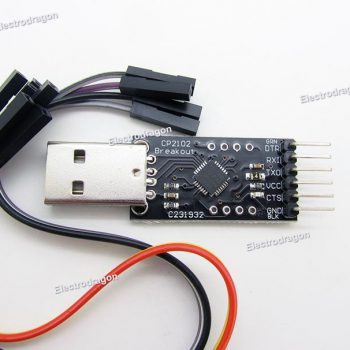
How to get a $3 CP2102 USB-UART bridge programmer to work with arduino


Electrodragon loot arrived! (workshop storage shelves update too)
 |
| Loot! :D |
Subscribe to:
Posts (Atom)